10-Year Project
One person, one AI
We are building a local artificial intelligence powerful enough to replace the large cloud models. It runs without the cloud, keeps personal data under the user's exclusive control, and acts as a private companion rather than a shared service.

The stakes
Your data should not become a digital avatar you do not control.
The cloud models that millions of people use every day learn from their conversations, documents, habits and preferences. Over time, they assemble digital avatars that know individuals better than they know themselves and can predict their behaviour in real time.
That knowledge is stored on infrastructure the user does not control, governed by terms the user does not write, and exposed to risks the user cannot fully assess.
The European Tech Sovereignty Institute believes that the only durable answer is to give every individual an artificial intelligence of their own: a local AI that belongs to them as personally as a phone, a key or a private notebook.
The human-machine boundary
AI should assist the body, not be implanted inside it.
A new kind of computer has emerged in recent years: biological machines that place human neurons on AI chips to accelerate training. Beyond the ethical questions, which are deeply troubling, the broader trend is clearly toward brain prostheses meant to augment human cognition.
Some believe this path is inevitable: after all, frontier AI never sleeps, can be trained indefinitely, even though it consumes the energy of a small city. Without an upgrade, they argue, humans risk becoming far inferior to the systems they created.
Yet the cost of that upgrade is unacceptable. Once a chip is inserted into a person's brain, the most intimate data — including patterns the individual may not even be aware of, such as transgenerational traits — can leak outside the body. The person no longer fully belongs to themselves. Worse, a single faulty update or malicious command could cause lifelong brain damage.
We believe AI should remain, at most, a companion and a tool outside the body — like an exoskeleton that assists humans in hazardous or demanding situations, rather than a device implanted inside them. Ideally, that exoskeleton is not connected to any cloud, so the user's data is never shared.
All of this depends on one thing: a local AI model powerful enough to do what ChatGPT and other frontier cloud models have done so far, then enter a recursive loop of improvement toward its ultimate form. We want to do exactly the same thing — but without the cloud.
This is another paradigm, close to the one being built today, yet fundamentally different in where power and data reside. To make it real, we are raising funding to hire researchers from around the world and develop the local AI at the heart of this project.
The vision
An AI in your pocket, as personal as a key or a notebook.
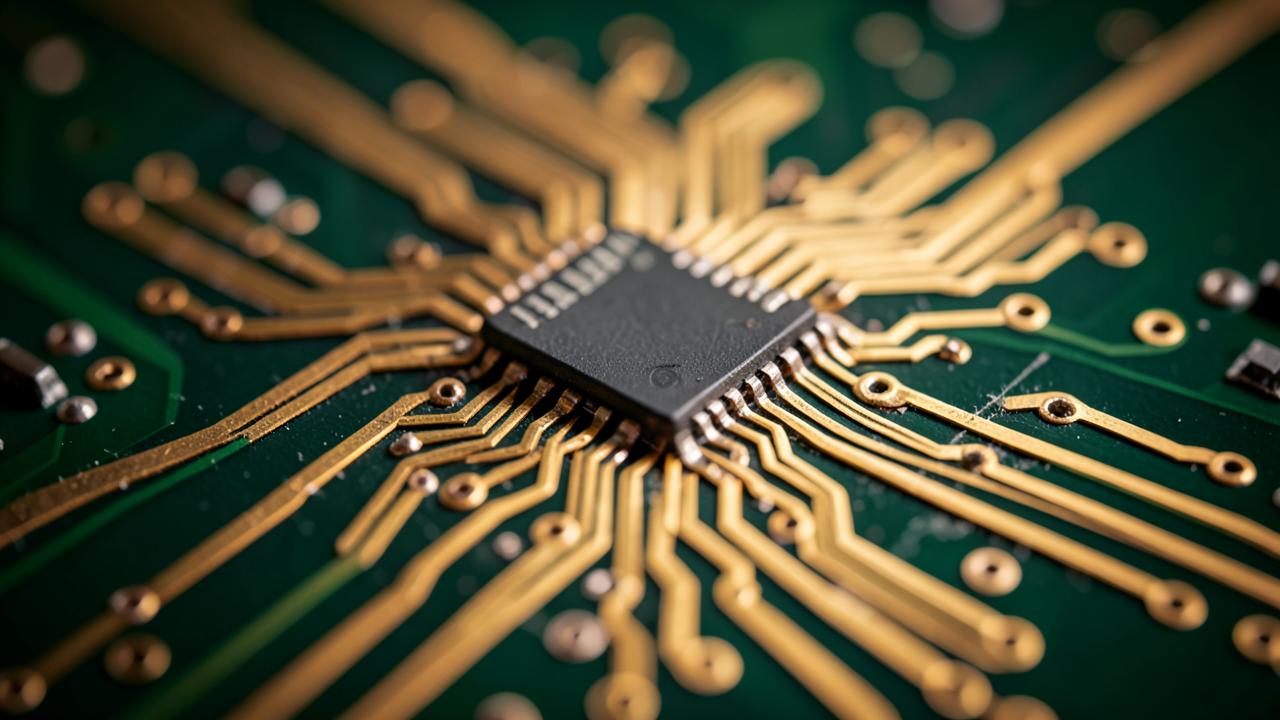
Our final product is an AI hosted on a USB key. The key unlocks with Face ID or a fingerprint. It contains the user's personal data, runs the model locally, and plugs directly into a computer.
It launches as an agent, not a chatbot. It works through the terminal, but with a friendly interface and a high-quality readme that makes local AI accessible to informed users.
One person. One AI. Not shared, not rented, not mined for advertising or training data.

Roadmap
From research infrastructure to a consumer USB key.

Phase 1 — Research infrastructure
Build an infrastructure capable of hosting a powerful open-source LLM, with more than one trillion parameters, and make it available to the Institute's researchers.
Phase 2 — Efficient local models
Develop local AI systems that are useful and efficient enough to run on ordinary hardware without relying on the cloud.
Phase 3 — Hardware integration
Design a USB key with an integrated chip able to handle AI model inference. Until that chip is ready, early generations will rely on inference on the machine to which the key is connected.
Phase 4 — Public product
Bring the USB AI key to market as a practical alternative to cloud LLMs, so that users can keep their data and their autonomy in their own hands.
Principles
Local, private, owned and open.
Local-first
Inference and data storage happen on the user's device, not in a remote data centre.
Privacy by design
Biometric unlock, encrypted storage and no cloud telemetry keep the user in control.
User ownership
The model, the data and the device belong to one person, not to a platform.
Open models
We rely on open-source weights and transparent research to avoid hidden dependencies.
Agent, not chatbot
The AI acts through the terminal and the operating system as a tool, not merely a conversational interface.
A long-term commitment
Ten years to give everyone an alternative to the cloud.
This is a long-term project. The path from a research-grade LLM cluster to a consumer USB key will take years of work in hardware, software, law and design.
The goal is worth the effort: in ten years, no one should have to accept that their private life has become a film shown on a public screen. Local AI can give Europe and its citizens a real alternative to the cloud models that know them too well.